By William Dipasquale September 3, 2026
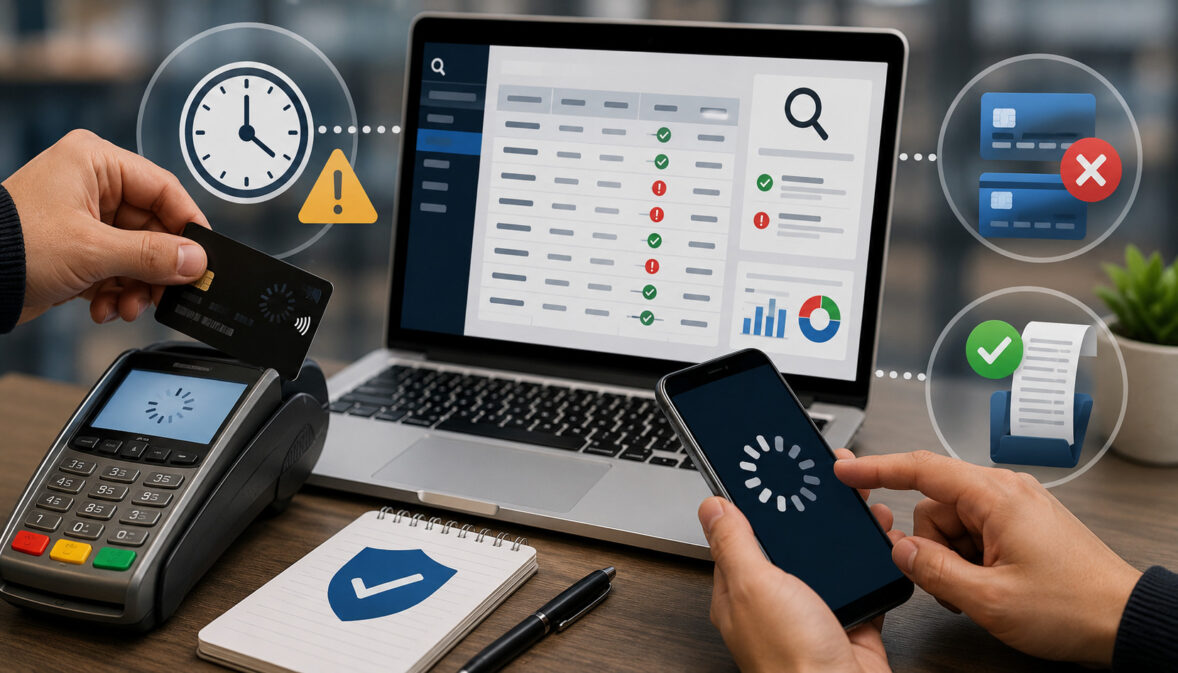
A customer taps or inserts a card. The terminal keeps spinning, the checkout screen freezes, or the POS eventually reports a timeout. A cashier tries the payment again, the second attempt succeeds, and minutes later the customer opens a banking app and sees two entries for the same amount.
That situation understandably looks like a double charge. But effective duplicate card charge after timeout troubleshooting begins with a different question: What actually happened to each payment attempt?
A timeout does not prove that the first payment failed. The processor or issuer may have approved the authorization even though the approval response never made it back to the terminal, POS, gateway, browser, or application.
Visa Acceptance specifically advises treating a timeout or unknown response as an unknown outcome and retrieving the latest transaction status before initiating another financial action.
That distinction matters because two entries in a customer’s banking app do not automatically mean two settled charges. The merchant may be dealing with two pending authorizations, one authorization plus one captured sale, a reversed authorization that is still visible at the issuer, or two genuine captured transactions.
The safest troubleshooting sequence is:
Payment Attempt → Timeout/Unknown State → Staff Retry → Two Apparent Transactions → Match Transaction Records → Determine Authorization vs. Capture → Keep Intended Transaction → Reverse/Void/Refund Duplicate if Needed → Reconcile → Communicate With Customer
The goal is not to make a pending entry disappear by taking the fastest-looking action. The goal is to establish the financial state of both attempts and then use the remedy that matches that state.
Why a Payment Timeout Does Not Always Mean Failure
A payment timeout describes a communications or status problem. It is not the same thing as an issuer decline.
Consider a simplified card-present transaction:
POS Sends Request → Processor Handles Request → Issuer Approves → Response Travels Back → Connection Fails → POS Times Out
If communication breaks after the transaction has already reached the processor or issuer, the terminal or POS may never receive the successful response. From the cashier’s point of view, nothing completed. From the processor’s point of view, however, an authorization may exist.
Official payment-provider documentation reflects this distinction. For example, Adyen instructs POS integrations to perform a transaction-status request when a timeout leaves the application without a definitive payment result, because a general request timeout can occur while the terminal transaction continues.
The original attempt might ultimately be:
- declined;
- approved but authorization-only;
- approved and captured;
- approved and subsequently reversed;
- canceled by the provider;
- still processing; or
- genuinely unknown until the processor is queried.
That is why a payment timeout retry must not automatically begin with another card submission.
Timeout vs. decline
A decline means the merchant received a response indicating that authorization was rejected. A timeout means the system did not receive the expected response within the applicable communication or application window.
Those are materially different situations.
A decline normally gives the payment system a definitive state: authorization was not approved under that request. A timeout may leave the system uncertain about whether the request was received, processed, approved, captured, or reversed.
Processor-specific timeout behavior varies. Some platforms can automatically cancel certain timed-out transactions, while other types of timeouts require the merchant application to retrieve transaction status. Therefore, staff should follow their own POS, gateway, and processor procedures rather than assuming every timeout behaves the same way.
Businesses developing outage procedures may also benefit from having a broader payment-system business continuity plan that specifies transaction verification, escalation ownership, and post-outage reconciliation.
Where can a timeout occur?
A timeout can happen across several parts of the payment chain:
- terminal to POS;
- POS to gateway;
- merchant application to payment API;
- gateway to processor;
- processor or network response back toward the merchant;
- browser or mobile checkout session;
- server-to-server callback;
- webhook or event delivery; or
- an application that crashes after submitting a request.
A browser timeout is especially misleading in ecommerce. The customer may see an error page even while a server-side payment request continues independently.
Similarly, a cashier may see “communication error” on a register while the standalone terminal has already sent the authorization request.
Why retrying can create a duplicate authorization
Suppose the first attempt is approved, but the response is lost:
Attempt 1 Approved but Response Lost → Attempt 2 Submitted → Attempt 2 Approved → Customer Sees Two Pending Entries
The second submission is not necessarily connected to the first. If the processor treats it as a new request, it can produce another authorization and another processor transaction ID.
Visa’s merchant guidance recognizes duplicate processing as a real payment problem and identifies repeated submission of the same transaction as one cause of duplicate disputes.
The important lesson is not “never retry.” It verifies unknown outcomes before retrying whenever the payment platform provides a status-lookup mechanism.
Duplicate Pending Authorizations vs. Duplicate Captured Sales
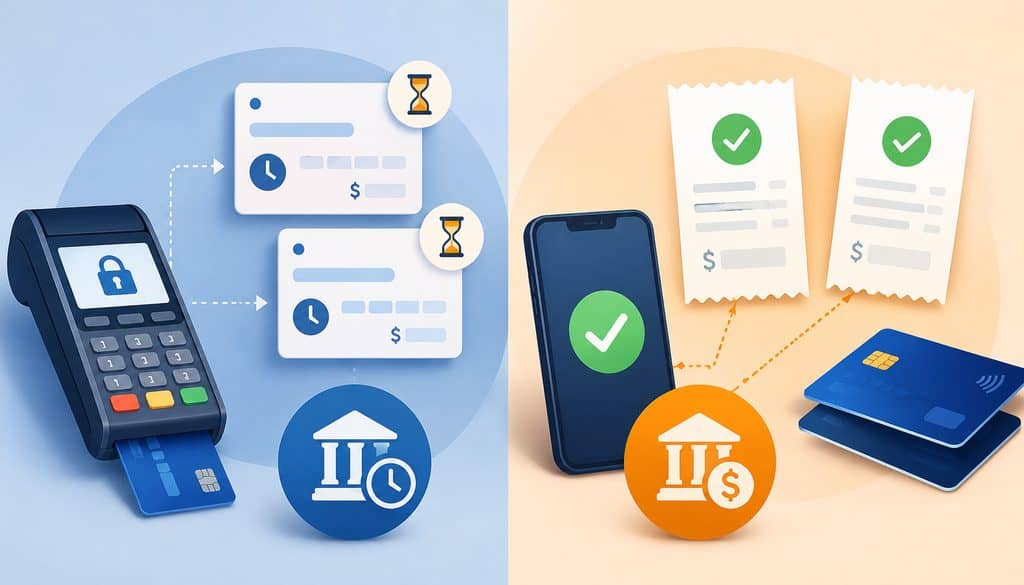
The most important diagnostic step is determining whether the merchant has duplicate authorizations or duplicate captured payments. Those states can look surprisingly similar to the customer.
A pending authorization normally represents funds or available credit reserved in connection with an approved authorization. Capture is a separate lifecycle event in which the merchant submits the authorized payment amount for clearing and settlement.
Visa Acceptance describes authorization as confirming available funds and potentially placing a hold, while capture claims the authorized amount for transfer. It also distinguishes authorization reversals, voids, and refunds based on transaction lifecycle state.
Duplicate pending authorizations
Two authorization requests may both have been approved while only one is intended for capture.
For example:
- Attempt 1 timed out after approval.
- Attempt 2 was approved normally.
- Attempt 2 became the completed sale.
- Attempt 1 remains visible as a pending authorization.
The customer may therefore see two $80 entries even though the processor reports only one $80 capture.
A pending authorization is not automatically a second completed charge. Issuers commonly display authorizations prominently because they reduce available credit or available funds while pending. Chase, for example, explains that authorization holds can appear as pending charges and that pending-transaction duration depends on factors including the merchant, bank, and card issuer.
Duplicate captured sales
A different problem exists when both retry attempts were captured.
That can happen when the first payment reached authorization and capture despite the timeout, then a second payment was submitted and captured as a separate transaction.
Once the merchant confirms two captures for one intended purchase, one needs corrective action. Depending on current processor and settlement status, that may mean voiding an eligible duplicate capture or refunding a duplicate that has already progressed beyond the platform’s void window.
| Situation | What Customer May See | Merchant Processor State | Typical Next Step |
| One captured + one pending authorization | Two entries | One capture, one authorization | Review reversal/void options for unused authorization |
| Two captures | Two posted or eventually posted payments | Two captures | Check void eligibility; refund duplicate if required |
| One capture + one reversed authorization | Two temporarily visible entries | One capture, one reversal | Monitor and explain issuer display timing |
| Unknown states | Two entries | Unclear | Investigate before taking financial action |
Provider terminology and available actions differ, so the table is a troubleshooting direction rather than a universal processing rule.
Do not refund merely because two pending entries appear
A refund is generally associated with money that has been captured or settled. It is not the normal tool for releasing an authorization that was never captured.
Suppose one transaction was legitimately captured and the other is only an unused authorization. If staff refund the valid captured transaction while the unused authorization is already being reversed, they can create a new problem:
- the merchant returns the legitimate payment;
- the customer still temporarily sees the authorization hold;
- the merchant may temporarily have no valid payment for the sale;
- the customer now sees additional transaction activity; and
- reconciliation becomes more complicated.
Visa Acceptance explicitly distinguishes an authorization reversal from a refund: a reversal requests release of a hold before settlement, whereas a refund returns money associated with a captured or settled transaction.
How to Check the Original Transaction Before Taking Action
A repeatable lookup procedure is more reliable than relying on what the terminal last displayed. Start with the sale itself and work outward through the payment records.
Use this workflow:
- Locate the original order, ticket, check, or invoice.
- Record the time of the first attempt.
- Record the time of the retry.
- Confirm both amounts.
- Confirm the masked card information where available.
- Find each authorization code.
- Find each gateway or processor transaction ID.
- Review authorization status.
- Review capture status.
- Check reversal, void, or refund activity.
- Identify which payment belongs to the intended sale.
- Choose the remedy appropriate to the duplicate state.
A merchant unfamiliar with how gateways, processors, and POS systems interact can review this broader explanation of merchant-service payment components before designing an internal lookup procedure.
How should staff match authorization codes and timestamps?
Start with several attributes rather than one.
Useful fields include:
- amount;
- transaction date;
- precise timestamp;
- authorization code;
- processor transaction ID;
- gateway payment/request ID;
- masked last four;
- card brand;
- MID or location identifier;
- terminal/register identifier;
- invoice, order, or check ID; and
- authorization and capture status.
| Field | Attempt 1 | Attempt 2 | Match/Notes |
| Amount | |||
| Timestamp | |||
| Authorization code | |||
| Processor transaction ID | |||
| Last four | |||
| Terminal/register | |||
| Capture status |
Timestamps are particularly valuable when two same-amount payments occur minutes apart. Multi-location businesses should also note whether local POS timestamps and centralized processor reports use different time zones.
Authorization codes can help distinguish two approval events. If the two attempts have different authorization codes, that is strong evidence that separate authorization attempts occurred. It still does not prove that both were captured or settled.
Transaction IDs are stronger identifiers than amount alone
Amounts are easy to duplicate. A restaurant customer can legitimately make two $25 purchases, and a service business can process two identical invoices.
The processor transaction ID, payment ID, request ID, or similar unique identifier is usually much more useful for tracing a single transaction through its lifecycle.
Visa Acceptance, for example, links follow-on actions such as reversals to the original request ID.
The last four digits are useful as supporting information, but they are not a unique financial transaction key. Many payments from the same card naturally share the same last four.
Which system should staff trust?
The customer’s banking app is important evidence of what the customer sees, but it should not be the merchant’s only payment-status source.
Depending on the architecture, financial state should normally be checked through the:
- processor portal;
- gateway transaction lookup;
- acquiring platform;
- POS transaction detail;
- payment API;
- server-side payment record; or
- provider support team.
If the POS says “failed” but the processor portal says “authorized,” the merchant needs to reconcile why those systems disagree rather than assuming the POS label is authoritative.
| State | Meaning | Refund Needed? |
| Declined | Authorization rejected | No |
| Authorized only | Funds reserved; no confirmed capture | Usually no refund |
| Reversed authorization | Release of authorization requested/processed | No refund |
| Captured | Payment submitted toward clearing/settlement | Possibly, if genuinely duplicate |
| Settled/posted | Payment has progressed through settlement | Refund may be required for confirmed duplicate |
| Unknown | State not confirmed | Investigate first |
Authorization, Capture, Settlement, and Bank Display Are Different States
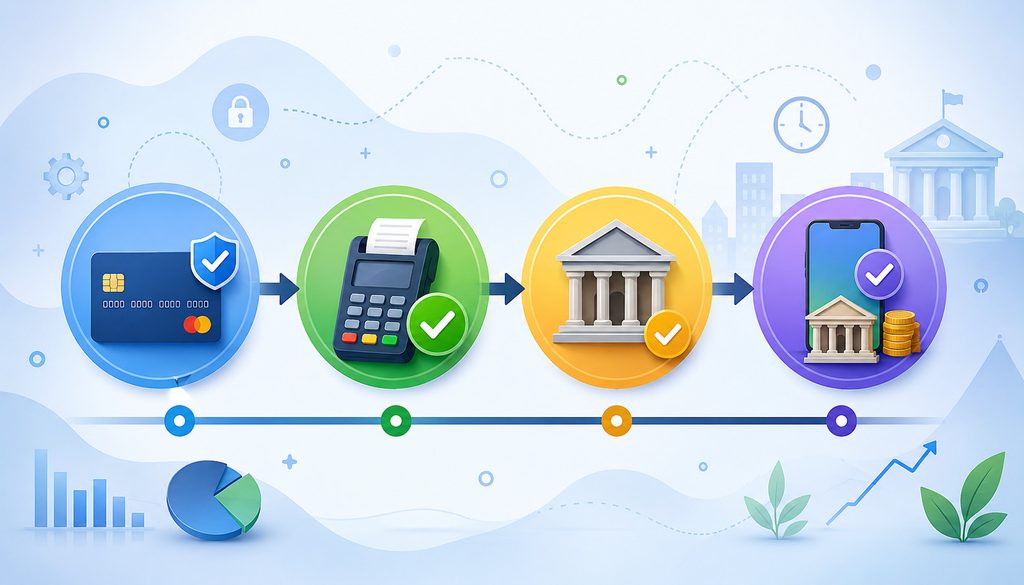
Accurate duplicate-payment troubleshooting depends on keeping the payment lifecycle separate.
Authorization is the process of requesting approval for a card transaction. Approval can create a temporary hold against the cardholder’s available credit or funds. Merchants that need additional background can review this explanation of authorization and capture transaction types, while transaction-specific decisions should still be based on current processor and card-network documentation.
Capture is the merchant’s submission of the approved transaction amount for clearing and eventual settlement. Some systems combine authorization and capture into a sale operation, while others separate them.
Settlement is part of the process through which captured transactions are exchanged and merchant funding is calculated.
A posted transaction is how the issuer ultimately presents a completed transaction to the cardholder. Issuers do not necessarily display every intermediate state identically.
That is why “I see two charges on my phone” and “the merchant settled two sales” are not interchangeable statements.
Pending authorization is not automatically a completed charge
Pending transactions can affect available credit or account balances, which makes them very real to the customer even though the merchant has not necessarily received settlement for them.
The merchant should acknowledge that impact rather than dismissing the customer’s concern. At the same time, staff should avoid calling every pending authorization a completed payment.
A useful internal state model is:
Created → Processing → Authorized → Captured → Settled
Exception states may include:
- declined;
- timeout/unknown;
- authorization reversed;
- voided;
- refunded;
- duplicate suspected.
The transition from “Processing” to “Unknown” is especially important. A POS transaction timeout should not automatically move to “Failed” unless the payment provider has definitively reported failure.
Different amounts do not always indicate a duplicate
Certain merchant environments can legitimately show authorization and final amounts that differ.
Restaurants may authorize an amount before a tip is finalized and later capture the correct tip-adjusted total. Hotels, rentals, fuel merchants, and other businesses may use authorization models governed by special network and provider rules.
Partial authorizations can also occur in supported payment environments.
Those specialized models should not be applied indiscriminately to ordinary retail transactions, but they demonstrate why transaction matching requires more than comparing amount and last four.
If a restaurant customer sees $60 pending and later $72 posted after adding a $12 tip, staff should investigate the lifecycle relationship before categorizing the two entries as a duplicate.
Reversal, Void, or Refund: Choosing the Correct Remedy

Reversal, void, and refund are not interchangeable terms.
A merchant should determine the transaction’s current state first and then identify which provider-supported action fits that state.
Visa Acceptance documentation gives a useful general model: authorization reversals address unused authorizations, voids cancel eligible follow-on transactions before they are submitted for settlement, and refunds return funds after capture or settlement. Exact platform behavior and terminology can differ.
| Action | Typical Transaction Stage | Purpose |
| Reversal | Authorization no longer needed | Request release of unused authorization |
| Void | Eligible transaction before settlement/provider cutoff | Cancel transaction before it proceeds further |
| Refund | Captured/settled transaction | Return money to customer |
Merchants can also review this overview of the difference between voiding and refunding a card transaction. The important operational point is that the appropriate action depends on the transaction’s actual processing and settlement state, not simply on what appears in the customer’s banking app.
When is a reversal appropriate?
An authorization reversal communicates that some or all of an approved authorization will not be used.
For a payment timeout duplicate charge situation, that may be the right direction when the merchant confirms:
- two authorization attempts exist;
- only one should be used;
- the duplicate has not been captured; and
- the provider supports reversal for that transaction state.
For additional background, this guide to how payment reversals work discusses authorization reversals and refunds as distinct corrective transaction types. Merchants should still confirm the exact reversal functionality available through their own gateway or processor.
Visa Acceptance states that authorization reversals release the hold associated with authorization and that success can depend on the issuer and processor configuration.
A reversal request does not mean the customer’s banking app will necessarily update instantly.
When is a void preferable to a refund?
A void may be preferable when a duplicate payment has been captured or queued but remains eligible for cancellation before the applicable provider sends it onward for settlement.
This can happen with a same-day duplicate capture.
Visa Acceptance explains that its void function applies to eligible capture or credit requests that have not yet been submitted to the processor, while emphasizing that the window can be short and processor-dependent.
Do not translate that provider-specific timing into a universal void deadline. Some platforms use different batch architecture, terminology, and eligibility rules.
If the duplicate has already progressed beyond the available void stage, the system may require a refund instead.
When does a duplicate require a refund?
A refund becomes the logical remedy when the merchant has confirmed a real duplicate captured transaction and that transaction can no longer be canceled through the provider’s void workflow.
For example:
Attempt 1 Captured → Attempt 2 Captured → Both Settled → Merchant Identifies Attempt 2 as Duplicate → Refund Attempt 2
The merchant should retain the refund transaction ID or reference and reconcile it against the duplicate capture.
This is different from:
Attempt 1 Authorized Only → Attempt 2 Captured → Attempt 1 Reversed
No refund is required against an authorization-only transaction simply because it appears pending.
How Long Should a Merchant Wait for a Pending Authorization to Fall Off?
There is no universal waiting period that merchants should promise.
Pending-authorization duration can vary according to the issuer, card network, transaction type, merchant category, processor/acquirer behavior, and whether an effective authorization reversal was transmitted.
Issuer guidance illustrates this variability. Chase notes that the duration of a pending transaction depends on factors such as the merchant, bank, and credit-card issuer. Visa Acceptance likewise states that authorization-hold expiration timing varies by issuing bank.
Therefore, “It will disappear tomorrow” is not a reliable customer-service statement unless the merchant has verified that specific expectation through the appropriate provider for the exact transaction.
Merchant reversal timing and issuer display timing are different
A merchant may successfully send an authorization reversal and still have a customer report that the pending entry remains visible.
Think of these as two separate events:
Merchant/Processor: Reversal Submitted
does not necessarily equal
Issuer App: Pending Entry Immediately Removed
The merchant can verify its own processor record, obtain a reversal reference, document the time sent, and confirm whether the provider reports successful handling.
The issuer controls the customer-facing account display and ultimately determines when its authorization hold is removed from that display.
That is why staff should give customers verified facts rather than promises:
- “Only one payment is captured.”
- “The other attempt is authorization-only.”
- “We submitted the supported reversal.”
- “Your card issuer controls when the pending entry disappears from its app.”
When waiting is appropriate
Waiting may be reasonable after the merchant has verified that:
- the extra entry corresponds to authorization-only activity;
- only one sale is captured;
- an applicable reversal or cancellation has already been submitted;
- the processor shows no second collectible payment; and
- provider guidance indicates no additional merchant action is needed.
Waiting should not mean ignoring the issue. Keep the incident documented and provide the customer with a case or transaction reference where useful.
Waiting is not the right response when:
- two transactions are captured;
- a duplicate has settled;
- processor status remains unknown;
- the wrong amount was captured;
- the provider indicates another action is required; or
- reconciliation shows merchant funding for two sales.
Three Workflows for Duplicate, Captured, and Unknown Transactions
Staff should not have to invent a response during a busy checkout line. A documented workflow makes the decision much easier.
Duplicate pending authorization workflow
Use:
Identify Two Authorizations → Determine Intended Transaction → Keep Intended Transaction → Reverse Unused Authorization if Supported → Document → Explain Pending Bank Timing
Confirm that the unused transaction has not been captured. Record the authorization code, transaction ID, reversal reference, and time of action.
Do not refund the valid captured sale simply because the unused authorization remains visible to the customer.
Duplicate captured sale workflow
Use:
Identify Two Captures → Determine Duplicate → Check Settlement Status → Void if Still Eligible or Refund if Settled → Record Void/Refund ID → Reconcile
The merchant should be able to connect every corrective transaction to the original order.
A useful record might show:
- Order 7351;
- Attempt 1 payment ID 10082 — captured;
- Attempt 2 payment ID 10091 — captured duplicate;
- Attempt 2 void/refund ID 10114;
- customer notified;
- settlement checked.
Unknown-state workflow
Use:
Timeout → No Blind Retry → Query Processor → Match Transaction → Resolve State → Take Correct Action
This direct-answer rule addresses the central duplicate card charge after timeout question: first determine whether the original attempt was authorized and whether either attempt was captured; then reverse an unused authorization, void an eligible duplicate capture, refund a confirmed duplicate that requires a refund, or wait when only a properly handled pending authorization remains.
If staff already retried, do not panic and do not cancel both transactions blindly. Treat the two attempts as separate records and investigate them methodically.
A business experiencing recurring communication failures should also review its payment-system downtime procedures and ensure employees know who owns transaction lookup after an outage.
Preventing Duplicate Payments With Status Checks and Idempotency
Prevention is better than correcting two payments after the customer notices them.
For integrated POS and ecommerce systems, the most important design principle is to preserve an uncertain state after a communications failure.
A robust application should be able to represent:
Created → Processing → Unknown → Status Lookup → Authorized/Captured/Failed
instead of:
Processing → Timeout → Failed → Automatically Submit Again
Idempotency for ecommerce and API payments
Idempotency lets an API recognize that a retry represents the same intended operation rather than a brand-new payment.
A useful application model is:
Order ID + Payment Attempt ID + Idempotency Key
When the provider supports idempotent payment requests, the application can retry an uncertain request using the same key rather than generating an unrelated second payment attempt.
Adyen describes idempotency as a way to safely resend API requests without performing the same operation multiple times and specifically identifies timeouts as a use case. It also recommends asynchronous webhooks for tracking outcomes when responses are missing.
Idempotency implementation is provider-specific. Developers must follow the gateway’s documentation for key scope, retention, retry behavior, parameter matching, and error handling.
Idempotency does not eliminate status lookup
Idempotency reduces duplicate-submission risk. It does not eliminate the need to reconcile an uncertain payment state.
For example, the payment may succeed server-side while the customer-facing application misses the response. The ecommerce platform still needs the webhook, API lookup, or provider query to move the order into the correct state.
Repeated webhooks should also be processed idempotently. Receiving the same payment event twice does not necessarily mean two financial transactions occurred.
POS retry controls
Useful POS controls include:
- disable repeated tapping of the Pay button while a request is processing;
- show “Checking payment status” after uncertain outcomes;
- query the processor before enabling another attempt;
- require manager review for unresolved transactions;
- retain original request identifiers;
- warn when the same order receives another same-amount attempt within a short operational window; and
- prevent an application error from silently creating a second payment request.
Same-card, same-amount, same-location, and close-timestamp activity can be a useful investigation signal, but businesses should not invent universal duplicate-detection thresholds. Legitimate repeat purchases occur.
Integrated systems can also improve the audit trail between checkout, accounting, and reconciliation. This overview of integrated merchant-service operations provides additional context on why connected transaction records can reduce manual reconciliation errors.
What Should Staff Tell the Customer?
Customer communication should be calm, specific, and based on confirmed transaction state.
The first goal is to acknowledge what the customer sees. Do not respond with “You weren’t charged” before checking the processor, because a pending authorization can reduce the customer’s available funds and the merchant may not yet know what happened.
A useful explanation is:
“We can see two payment attempts associated with the timeout. We’re checking which attempt actually completed. If one is only a pending authorization, we’ll use the appropriate authorization process rather than refunding the valid payment. Your card issuer controls when a pending hold disappears from its account display.”
The exact wording can be adapted to the situation.
Communication principles for frontline staff
Staff should:
- acknowledge that two entries are visible;
- explain that pending and completed transactions are different states;
- say that processor records are being checked;
- tell the customer what the merchant has confirmed;
- explain any reversal, void, or refund already performed;
- avoid promising an exact pending-hold release time;
- provide a receipt or case reference where useful; and
- identify a contact path if follow-up is needed.
Do not blame the issuer, processor, terminal, or customer prematurely. The first job is to interpret both merchant-side and customer-side evidence accurately.
If the customer wants an immediate refund
The response should be based on whether a refundable capture exists.
If there is one valid capture plus one authorization-only transaction, refunding the valid payment may create a worse result. Staff can explain that they must first verify which payment actually completed so they do not refund the intended sale while leaving the authorization issue unresolved.
If two captures are confirmed, the merchant should follow its supported duplicate-payment correction workflow.
When a refund is necessary, provide useful documentation such as:
- original transaction reference;
- refund amount;
- refund date;
- refund or credit reference; and
- masked payment information.
Do not expose the full PAN.
If the customer has already left
Finance or payment-support staff can still investigate using:
- order or check ID;
- attempt timestamps;
- transaction IDs;
- authorization codes;
- masked last four;
- processor portal records;
- receipts; and
- settlement reporting.
A banking-app screenshot can provide context, but it is not definitive evidence of processor capture. Avoid retaining unnecessary account information contained in customer screenshots.
Reconciliation, Support Evidence, and Root-Cause Analysis
Resolving the customer complaint is only the first half of the incident. The merchant should also prove that its financial records ended correctly.
Reconcile:
POS Order → Attempt 1 → Attempt 2 → Processor Capture(s) → Reversal/Void/Refund → Settlement → Bank Deposit
| Order | Attempt 1 | Attempt 2 | Captured? | Remedy | Reconciled? |
If two transactions captured and one was refunded, accounting should track:
- original intended capture;
- duplicate capture;
- refund transaction;
- processor settlement activity; and
- resulting merchant funding.
Do not assume a refund will necessarily net against the same batch or bank deposit as the original sale. Processor funding cycles and settlement timing vary.
Daily exception review
Payment operations teams can review:
- timeout transactions;
- unknown payment states;
- duplicate authorization alerts;
- same-card/same-amount attempts;
- duplicate captures;
- reversals;
- voids; and
- refunds.
Signals such as Same Amount + Same Last Four + Same Location + Close Timestamps are useful for prioritizing investigation. They are not proof of a duplicate.
False positives include customers making two legitimate purchases, two invoices with the same amount, separate service charges, and valid multi-step authorization models.
Root-cause analysis after resolution
Once the customer outcome is correct, ask why the timeout happened.
Possible causes include:
- internet interruption;
- terminal-to-POS communication failure;
- gateway timeout;
- application crash;
- processor response delay;
- browser/session interruption;
- API connectivity issue; or
- delayed event/webhook delivery.
Do not randomly increase application or network timeout values without provider guidance. Timeout behavior can be an intentional part of the payment protocol.
A simple incident log helps identify patterns:
| Time | Order | Device | Error | Processor Status | Retry? | Outcome |
Repeated incidents should involve the appropriate POS provider, payment gateway, processor/acquirer, and internal network or IT team.
What should be logged for processor support?
Collect:
- MID/location;
- POS order/check ID;
- terminal or register ID;
- amount;
- first-attempt timestamp;
- retry timestamp;
- authorization codes;
- processor/gateway transaction IDs;
- masked last four;
- exact error or timeout message;
- authorization status;
- capture status;
- reversal/void/refund status; and
- customer impact.
| Field | Value |
| Order/check ID | |
| Amount | |
| Attempt 1 time | |
| Attempt 2 time | |
| Authorization codes | |
| Transaction IDs | |
| Capture status | |
| Void/reversal/refund status |
Support staff should not be sent full PAN, CVV, PIN, passwords, or magnetic-stripe data.
PCI DSS and Secure Duplicate-Payment Investigation
Investigating duplicate payments typically requires transaction metadata, not sensitive authentication data.
Useful investigation fields include:
- processor transaction ID;
- gateway payment ID;
- authorization code;
- timestamps;
- amount;
- order reference;
- terminal/location information; and
- appropriately masked PAN information.
PCI SSC explains that PAN must be masked when displayed unless there is a documented business need to see more, and it distinguishes display masking from storage protections.
PCI SSC also states that sensitive authentication data such as card verification codes and PIN/PIN-block information must not be stored after authorization.
In practical terms, duplicate payment troubleshooting should never require an employee to email a customer’s full card number and CVV to a processor representative.
Staff permissions and audit trail
Frontline employees may need enough access to:
- locate a transaction;
- view an appropriate masked card reference;
- determine whether status is known;
- identify an authorization or capture; and
- escalate uncertain transactions.
Refund, void, and reversal permissions can be restricted according to the merchant’s internal controls. There is no universal dollar threshold that every business should use.
Record:
- employee or user;
- original transaction ID;
- retry transaction ID;
- action taken;
- reversal/void/refund reference;
- timestamp;
- reason;
- approver where required; and
- support case number.
This creates accountability and makes later settlement reconciliation much easier.
Real-World Timeout Scenarios
The same payment-state principles apply across different merchant environments, although transaction flows can differ.
Card-present retail scenario
A customer purchases $146 of merchandise.
The terminal shows “Processing.” The POS eventually reports a communication timeout, so the cashier runs the card again. The second transaction displays “Approved.”
The customer immediately sees two $146 pending entries.
The correct investigation is not “refund one $146.”
Staff should:
- locate both processor transaction IDs;
- compare the timestamps and authorization codes;
- determine whether the first attempt reached authorization;
- determine whether either or both attempts captured;
- identify the intended completed sale;
- reverse an unused authorization if appropriate and supported;
- void a duplicate capture if still eligible; or
- refund only when a duplicate captured transaction requires a refund.
Ecommerce scenario
A shopper clicks Pay on a $220 order. The browser request appears to time out, and the customer clicks Pay again.
A well-designed system should inspect the server-side payment state rather than relying on the browser result.
If the gateway supports idempotency, the original payment operation should use a consistent attempt identifier and idempotency key so a safe retry does not create another financial operation. Webhook and transaction-status information should then reconcile the final state.
A duplicate browser submission is not necessarily a duplicate charge, just as a duplicated webhook event is not necessarily a duplicate capture.
Restaurant scenario
A restaurant authorizes a card before the final tip has been entered. The final captured total is later higher.
If the customer sees a pending amount and a different final amount, staff should check whether the entries represent the authorization and its tip-adjusted completion rather than immediately labeling them duplicates.
Restaurants should follow their payment provider’s rules for authorization, tip adjustment, capture, and reversal. Special authorization behavior should not be assumed to apply outside supported merchant categories.
Quick Staff Checklist and Decision Matrix
When a payment times out and a retry produces two apparent charges, use:
Stop → Look Up → Match → Determine State → Keep Intended Transaction → Reverse/Void/Refund Only If Appropriate → Explain → Document → Reconcile
Duplicate Card Charge After Timeout Checklist
| Check | Complete? |
| Original order located | |
| Both timestamps compared | |
| Authorization codes compared | |
| Transaction IDs found | |
| Capture status checked | |
| Pending vs. posted determined | |
| Intended transaction identified | |
| Duplicate reversal/void checked | |
| Refund used only if needed | |
| Customer informed | |
| Support evidence recorded | |
| Settlement reconciled |
Decision matrix
| Situation | Recommended Direction |
| One capture + one pending authorization | Verify unused authorization and reversal options; avoid unnecessary refund |
| Two captured but unsettled transactions | Check provider-specific void eligibility |
| Two settled transactions | Refund confirmed duplicate through supported workflow |
| Two pending authorizations | Identify intended authorization; reverse unused authorization where supported |
| Unknown states | Stop and status-check/escalate before financial action |
Questions to ask the processor or gateway
When the merchant cannot resolve the incident internally, ask:
- Did both attempts reach your platform?
- Which transaction ID belongs to each attempt?
- Were both attempts authorized?
- Were both captured?
- Is either authorization already reversed?
- Can the unused authorization be reversed?
- Is either capture still eligible for void?
- Has either payment settled?
- What corrective workflow applies to this transaction state?
- Can you provide a reversal, void, or refund reference?
- What should we communicate regarding the pending authorization?
- Does the platform support idempotency?
- What status lookup should occur after a timeout before retrying?
Managers should separately answer:
- Was the first transaction checked before retry?
- Which attempt belongs to the intended sale?
- Did the customer receive one receipt or two?
- Has a reversal already been submitted?
- Has a refund already been initiated?
- Who owns customer follow-up?
- Who reconciles settlement and funding?
Common Duplicate-Payment Troubleshooting Mistakes
The most costly mistakes usually come from confusing transaction states.
- Treating a timeout as a decline: A timeout can represent an unknown outcome. Verify before retrying.
- Immediately submitting the card again: A second request can create another authorization when the first request actually succeeded.
- Treating two pending items as two settled charges: Banking apps show issuer-side pending information, not the merchant’s complete settlement records.
- Refunding the valid capture too early: This can return the payment the merchant intended to keep while doing nothing directly to an authorization-only hold.
- Confusing reversal and refund: A reversal addresses an unused authorization; a refund returns funds from an applicable captured transaction.
- Assuming an authorization code proves capture: Approval and capture are different lifecycle events.
- Matching only by amount: Two legitimate transactions can have identical values.
- Promising the pending entry will disappear tomorrow: Release and display timing varies.
- Ignoring processor transaction IDs: Unique identifiers are much stronger evidence than amount and last four alone.
- Ignoring settlement status: A captured transaction may still be voidable in some platforms, while a settled duplicate may require a refund.
- Sending sensitive card data to support: Transaction IDs, timestamps, masked PAN, and authorization codes are normally enough for investigation.
Frequently Asked Questions
Why can a payment timeout cause two card charges?
The first payment can reach the processor or issuer and receive authorization even though the response does not successfully return to the merchant application. If staff then retry the card as a brand-new payment, a second authorization can be created.
The customer may consequently see two pending entries. Whether both become completed charges depends on the capture and settlement state of each transaction.
Does a timeout mean the first transaction failed?
No. A timeout means the expected response was not received within the relevant system’s timing rules. Depending on where communication failed, the first transaction may have been declined, authorized, captured, reversed, canceled, or left temporarily uncertain.
The merchant should perform a processor transaction lookup or follow the payment provider’s status-verification procedure before treating an unknown attempt as failed.
What is a duplicate authorization?
A duplicate authorization occurs when more than one authorization request is created for what was intended to be one purchase.
For example, an original payment may be approved but its response is lost, after which a retry creates another approval. Two authorization holds may then appear even though the merchant intends to capture only one payment.
How do I tell whether both charges actually went through?
Check merchant-side transaction records rather than relying only on the customer’s banking app. Compare the order ID, amount, timestamps, authorization codes, processor or gateway transaction IDs, masked last four, terminal/location, capture status, and settlement status. Two authorization approvals do not automatically prove that two captures occurred.
Is a pending authorization the same as a completed charge?
No. A pending authorization generally reflects approval and a temporary hold on available funds or credit. Capture and settlement are later financial lifecycle stages.
Issuer apps can make pending activity look similar to a posted purchase, so merchants should confirm processor state before describing the extra entry as a completed duplicate.
How do I match authorization codes and timestamps?
Build a side-by-side transaction record. Compare exact timestamps, authorization codes, payment IDs, amount, masked last four, card brand, terminal/register, location, and order reference.
Close timestamps are useful for distinguishing retry attempts. Different authorization codes suggest distinct authorization attempts, but capture status must still be checked separately.
Should I refund a duplicate pending authorization?
Usually, the first question is whether there is a captured transaction to refund. An authorization-only transaction may instead require an authorization reversal or no further merchant action, depending on provider status and procedures.
Refunding the legitimate captured payment can create unnecessary financial and customer-service complications.
What is the difference between a reversal, void, and refund?
An authorization reversal generally requests release of an approved authorization that will not be used. A void usually cancels an eligible transaction before it reaches the provider’s applicable settlement stage.
A refund returns money associated with a captured or settled transaction. Terminology and eligibility vary by provider, so verify the action shown for the specific transaction.
When should a duplicate transaction be voided?
Consider a void when the merchant confirms a duplicate capture or sale and the payment provider still identifies that transaction as eligible for void before its applicable settlement processing.
Do not assume that every “pending” transaction can be voided. Check the transaction type, capture status, and available actions.
When does a duplicate charge require a refund?
A confirmed duplicate captured transaction may require a refund when it has progressed beyond the provider’s void/cancellation stage.
The merchant should identify which capture belongs to the intended purchase, refund only the duplicate, record the refund reference, notify the customer, and reconcile the original payment, duplicate, and refund.
How long can a pending card authorization remain?
There is no universal duration that applies to every authorization.
Timing can vary with the issuer, network, transaction type, merchant category, processor/acquirer, and whether a reversal has been transmitted. Give customers only provider- or issuer-specific expectations that have been verified for the transaction rather than promising an arbitrary number of days.
Why can an authorization remain pending after a reversal?
The merchant’s reversal request and the issuer’s customer-facing account display are separate parts of the process. A processor may show that the merchant successfully sent or processed a reversal while the issuer continues to display the authorization temporarily. The merchant should document its reversal reference and avoid promising immediate removal from the issuer’s app.
What should staff tell a customer who sees two charges?
Acknowledge that two entries are visible and explain that the merchant is checking whether both are completed payments or whether one is only pending.
Tell the customer what has been verified, what corrective action has been taken, and that pending-display timing is controlled by the issuer. Avoid dismissing the concern or promising an exact disappearance time.
How does idempotency help prevent duplicate card payments?
Idempotency allows supported APIs to recognize a repeated request as the same intended operation. When an ecommerce payment request loses its response, retrying with the same properly implemented idempotency key can prevent the retry from creating an independent payment operation. Merchants must implement the gateway’s idempotency rules correctly and still reconcile the final transaction status.
What should be documented for processor support?
Record the order or check ID, MID/location, amount, terminal/register, both attempt timestamps, authorization codes, gateway or processor IDs, masked last four, exact timeout/error message, capture status, settlement status, corrective action, and customer impact. Do not include full PAN, CVV, PIN, passwords, or magnetic-stripe data.
Conclusion
A duplicate card charge after timeout should be treated as a payment-state investigation, not an automatic refund request.
The core rule is simple: a timeout does not prove that the first transaction failed. Before retrying or correcting anything, locate the original payment, match both attempts using timestamps and transaction identifiers, determine whether each transaction is authorized or captured, and identify the intended sale.
If the extra transaction is authorization-only, the appropriate response may be an authorization reversal or verified waiting period rather than a refund. If a duplicate capture is still eligible for cancellation, a void may be available. If a genuine duplicate has already progressed through settlement, a refund may be required.
Throughout the process, communicate accurately with the customer, avoid promising a universal hold-release time, preserve a PCI-conscious audit trail, and reconcile the final processor and bank funding records.
The most effective prevention strategy is equally straightforward: never let “timeout” automatically mean “failed.” Use transaction-status lookup, idempotency where supported, controlled retry logic, employee training, and daily exception review to keep an uncertain payment from becoming a real duplicate.
This article is informational and does not replace processor, acquirer, gateway, card-network, or issuer instructions. Merchants should verify provider-specific authorization, reversal, void, refund, capture, settlement, retry, and pending-authorization procedures with their processor/acquirer and payment provider before taking financial action.